| | 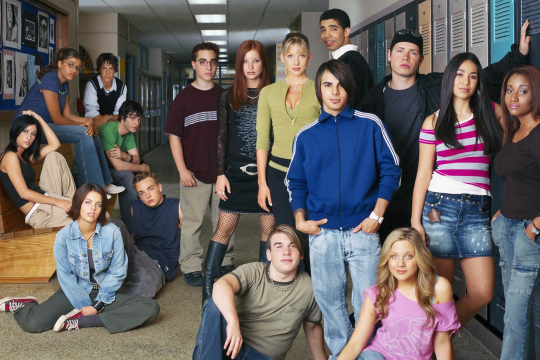 | | Ahhh 2004, when high schoolers did normal high school stuff, like party and bully one another, instead of disappearing into their Chromebooks all day. | Barbara Cole/Epitome Pictures | | | The Week in Markets | | Earnings season — the 80-second summary | In the first 80 seconds after the S&P 500’s closing bell last Wednesday, four of the world’s 10 biggest companies — Alphabet, Amazon, Meta, and Microsoft — reported their Q1 earnings in rapid succession, and all four beat estimates. Not just beat. Crushed. The good news came as no surprise; analysts could already foresee that the billions being poured into AI chips and capex would drive massive earnings, so they’ve been ratcheting up expectations accordingly for weeks. The surprise was the sheer scale of the beats, and that it wasn’t just Big Tech. Manufacturing (GE, Boeing), energy (Nextera, Vertiv), and finance (JPMorgan Chase) all chipped in to help the combined index top estimates by 20%. Those big earnings — and the growing confidence that they’ll keep coming — are why analysts have grown so bullish about the rest of 2026.
And yet all those parabolic lines didn’t necessarily guarantee the same outcome for everyone’s stock prices. Those big-earning tech juggernauts are also spending big, too, and investors are clearly more excited about the companies where it’s more evident how that spending will turn into profits (e.g., Alphabet +10.3%, Amazon +3.4%) than the ones (Meta -9.3%, Microsoft -3.5%) where the path seems murkier.
| | | | | | 📈 What’s Up: Intel, 26 years after its near-collapse, finally topped its dot-com-era peak thanks to a comeback rally fuelled by high demand for chips. Shares finished last week up 114% on the month.
📉 What’s Down: Avis, the rental-car company/meme stock of the moment, hit the skids after a short squeeze in April vaulted its shares +440%. Its CEO is blaming the stomach-churning joyride on a single hedge fund. | | The Chart of the Week |  | | |
Wealthy Canadians are sending their money on tropical vacations. With the sting of tax season still fresh, The Globe and Mail published a spicy story about offshore tax havens — countries like the Bahamas, Barbados, and Bermuda, where the mega-rich and major corporations park cash to dodge taxes. Canada’s coffers lose an estimated $15 billion in annual tax revenue thanks to the $682 billion stashed in offshore havens — an increase of 165% since 2014. (Mark Carney caught some heat for Brookfield’s use of such tax havens when he was at the helm.) | |
What’s really behind Rogers’s buyout blitz? Rogers is said to be offering buyouts to half of its 20,000 employees, and some analysts point to AI as a convenient scapegoat. But as The Wall Street Journal has reported, companies were already overdue for course correction after overhiring during the pandemic. Rogers’s real problem, as CEO Tony Staffieri admitted recently, is that the company has struggled to find new clients as Canada cuts back on immigration. Good thing Rogers has a lucrative side hustle. | |
The London Marathon’s biggest winner? Adidas. Last week, Kenyan marathoner Sabastian Sawe and runner-up Yomif Kejelcha, of Ethiopia, both broke the fabled two-hour barrier, women’s champ Tigst Assefa, also of Ethiopia, set a new race record — and all three did it wearing Adidas’s new US$500 Adizero Adios Pro Evo 3, the lightest running supershoe ever made, weighing less than 100 grams (and now sold out). Adidas desperately needed the win. Its stock has plunged 52% over the past five years, while upstart rivals Hoka and On keep gaining ground. In the week post-marathon, though, Adidas shares were up 8%. | 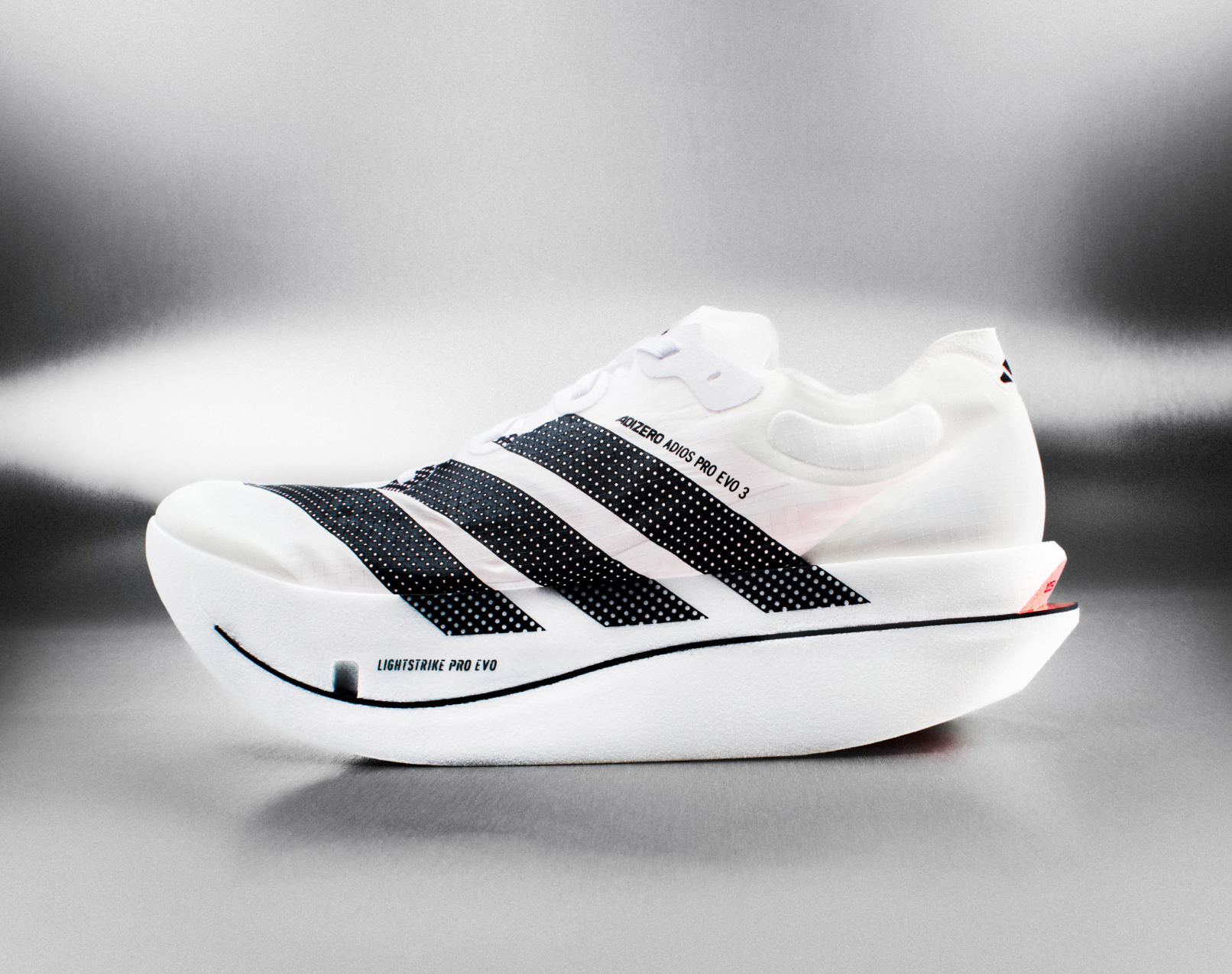 |
The Chromebook boom faces a classroom backlash. It’s no accident that Chromebooks now make up about 60% of the K-12 mobile-device market and that 94% of teachers in a recent survey reported using YouTube for classroom instruction: internal documents obtained by the WSJ show that Google has long viewed schools as a way to build lifelong brand loyalty. But now the backlash is building. Multiple studies link heavy screen use to weaker academic outcomes, and parents are pushing schools to block YouTube and phase out 1:1 Chromebooks.
—Abigail Covington & Jenna Benchetrit
|  | | The FOMO Index | | by Stacey Woods | | Important | | 🤖 | Claude deletes company’s entire database in nine seconds. Thinks with a little practice it could get that down to five.
Source | | | | 🛒 | Amazon now features AI-hosted podcast-style shows about products. Check out its big hit, The Joe Rogaine Experience.
Source | | | |  | |  |
| 💉 | Generic Ozempic is coming to Canada. You can put the money you save toward any desire not blunted by Ozempic.
Source | | | | 🎫 | Controversy-plagued Met Gala has had to slash its ticket prices. And Kardashians drink free before 10.
Source | | | | | | Crash & Burn | |  | | To the Moon | | | 🧠 | Science concludes Neanderthal brains were actually the same size as Homo sapiens’. But it took a Homo sapien to figure that out, so…
Source | | | | 💕 | Tinder partners with Sam Altman’s eyeball-scanning orb so users can prove they’re human before swiping at each other like Neanderthals.
Source | | | | |  | |  | | 🌭 | Costco now offering its famous hot dog combo with water instead of soda. You know, for when you want something healthy.
Source | | | | 🦚 | Stolen Alberta peacocks are safely back at home. Police say the suspects are possibly armed and definitely not fabulous.
Source | | | | | | | Who Cares? | | | The Big Important Story | | How Alimentation Couche-Tard Ate the World | Alimentation Couche-Tard, aka Couche-Tard, is a giant Canadian company that you probably don’t think much about. It’s not new. It doesn’t develop AI or sit on giant oil reserves. It just runs convenience stores. But over the past four decades, Couche-Tard (French for “night owl”) has expanded from a single shop to nearly 17,300 stores across 29 countries and territories. And, thanks to steady earnings, its stock has climbed by 91% over the past five years, outperforming the S&P 500 and the TSX. So how did they do it and what is there to learn?
From corner shop to colossus
Founder Alain Bouchard got his start in the late 1960s stocking shelves at his brother’s convenience store, before opening his first place, in Laval, Quebec, in 1980. Back then, the industry was mostly a loose patchwork of no-frills local and regional operators. “You could just put a store on a busy corner and you’d be OK,” one analyst later explained.
In short order, Bouchard started buying area chains and improving them in small but meaningful ways — by standardizing pricing, upgrading inventory, extending hours, etc. He cut fuel prices to drive foot traffic, then upsold higher-margin items like food, coffee, and private-label snacks.
But perhaps Couche-Tard’s true genius was that it still gave store managers latitude to tailor their locations, unlike the uniform approach of 7-Eleven, the industry’s big dog. Couche-Tard stores in yuppy neighbourhoods stocked more imported beers, while locations in Hispanic enclaves carried more Latin brands. At one point an outlet in Montreal even adopted a NASA motif.
Swallowing Circle K
In 1999, Couche-Tard went national with the purchase of 980 Mac’s, Mike’s Mart, and Becker’s. But its defining deal came in 2003, when it bought Circle K and its 2,300 U.S. locations from ConocoPhillips for about US$821 million. Over the next decade, Couche-Tard applied its acquire-and-improve playbook and grew revenue by about 11% annually, with profits expanding in lockstep.
Still vying for 7-Eleven
The company attempted its biggest acquisition yet last year with its US$47 billion bid for Seven & i, the Japanese parent of archrival 7-Eleven — but months later, it withdrew the offer, accusing Seven & i of failing to engage constructively. Couche-Tard CEO Alex Miller says the company intends to be “persistent in pursuing a transaction,” despite Seven & i’s apparent lack of interest.
In the meantime, Couche-Tard plans to keep boosting profits with incremental upgrades to its loyalty program and food offerings. Its stores sold 13.3 million meals (the big hit: breakfast sandwiches) in the latest quarter, putting it in league with small fast-food chains. Not the flashiest headline, admittedly — but convenience-store dominance isn’t built on moon shots; it’s built one beer run, fuel-up, and egg-and-cheese croissant at a time.
—Tom Clynes
| | | The Big Read | | 🪙 U.S. Mint Buys Drug Cartel Gold and Sells It as ‘American’* | Most of the U.S. Mint’s $1-billion stash of gold doesn’t come from America, and according to this New York Times investigation, the very dodgy list of actual sources includes a Colombian mine controlled by the Clan del Golfo drug cartel, Peruvian pawn shops, and a graveyard in Honduras. Crazy, right? Canada would nev—oh, wait, the Royal Canadian Mint might be even worse? | NYT
*Article is paywalled, which, yeah, is kind of annoying. But we think good journalism is worth paying for.
| | | The Wisdom of Social | |
 | | Thoughts on Today’s Issue? | | | | | This week’s newsletter contributors: Brennan Doherty (writer), Devin Gordon (writer), Stacey Woods (writer), Jenna Benchetrit (writer), Ambrose Martos (fact checker), Ciara Rickard (copy editor), Maude Campbell (copy editor), Sara Black McCulloch (fact checker), Eva Grace Clement Cruz (specialist, product engagement), Lauren Edwards (production coordinator), Matthew Karasz (markets editor), Jared Sullivan (senior editor), Peter Martin (senior editor), and Devin Friedman (editor-in-chief).
Disclosures: Contributors to this newsletter own shares in Alphabet, JPMorganChase, and Microsoft.
TWIM: Total returns shown in local currency, via TradingView. | | | |